Wisdom in the Wings: Nature’s Lessons from the Golden Eagle

High above the dense wilderness of Latvia’s National Forest, the Golden Eagle reigns as a messenger of strength, wisdom, and sacrifice. In the vast, untamed sky, she embodies the profound balance between survival and spirit, between the primal and the divine.
Her sharp eyes witness the ebb and flow of existence, reminding us that nature is not merely a force—it is a teacher, revealing truths about resilience, purpose, and transformation.
Among the towering trees and whispering winds, life unfolds in raw simplicity and brutal complexity, reflecting the eternal cycles that govern both the physical and spiritual worlds.
Within this sacred landscape, a mother Golden Eagle faced choices that tested the boundaries of instinct and care. With two Eaglets born into scarcity, she was forced to navigate the fine line between nurture and necessity, between love and loss.
She carried forth nature’s wisdom, revealing how survival is not simply about endurance, it is about understanding sacrifice, honoring what has passed, and sustaining the future.
Nature Symbolism and Golden Eagle Symbolism
Nature Symbolism: The Eternal Cycle of Life and Survival
Nature is more than a mere backdrop to existence—it is a living, breathing force, shaping and guiding all who dwell within its embrace. The Latvia National Forest, with its towering pines and dense undergrowth, mirrors the rhythm of life itself.
Here, nothing is stagnant, for even in stillness, the pulse of growth and decay moves in harmony, weaving survival and rebirth into an unbroken cycle.
The forest is endurance, standing as a testament to the passage of time, its roots anchored deep into the earth, absorbing history, wisdom, and the unseen energies of life.
Within its depths, time is neither lost nor forgotten but carried forward in whispers through the wind. The rustling leaves hum with the voices of ancestors, spirits that once roamed these lands.
The sky above, where the Golden Eagle reigns, is clarity—offering perspective beyond the limits of the earth. The vast openness of the heavens beckons all who dare to rise, challenging them to see beyond the immediate, beyond hunger, beyond loss, into the higher order of existence.
Yet nature is also unforgiving. It does not pause for grief, nor soften its edges for comfort. It is a place where brutal truths and sacred wisdom coexist, teaching those who listen that survival is not merely about strength but about understanding the forces at play.
It is within this raw reality that the mother Golden Eagle makes her choices, balancing instinct with knowing, allowing the natural world to guide her while honoring its deepest truths.
The Essence of Golden Eagle Symbolism: Strength, Vision, and Sacrifice
The Golden Eagle is not just a hunter—it is an embodiment of wisdom, sovereignty, and spiritual transcendence. In cultures across the world, it has been revered as the eye of the divine, carrying messages between the earth and the unseen realms above.
It does not merely fly; it ascends, breaking the limitations of the physical world, seeing beyond immediate struggle into the great design of existence.
Strength & Resilience – The Golden Eagle does not falter. Its wings, stretching wide against the wind, symbolize endurance in the face of hardship. Even in scarcity, it does not hesitate—it adapts, using the power of foresight rather than brute force alone. Strength is not domination; it is persistence through uncertainty.
Vision & Clarity – Possessing the keenest eyesight of all birds, the Golden Eagle teaches us that true power comes not from strength alone, but from perception.
To see beyond fear, beyond hunger, beyond grief, is to understand that struggle is part of transformation. Those who gaze into the depths of existence will find that nothing is lost—only changed.
Sacrifice & Renewal – Nature wastes nothing, and the Golden Eagle is no exception. The mother’s decision to feed her surviving young with the fallen sibling is not cruel, it is an act of continuation, a recognition of the sacred cycle.
Loss does not end existence; it feeds what must endure. In this choice, the Golden Eagle reflects the profound lesson that death, when met with reverence, becomes the seed of new beginnings.
Juvenile Golden Eagle Symbolism: The Struggle for Identity and Survival
Before an Eagle reaches its full power, it must first face the trials of hunger, hardship, and transformation.
The juvenile Golden Eagle is not yet the wise ruler of the sky—it is an untamed force, driven by instinct and shaped by experience. It has the hunger to survive, but not yet the vision to understand what survival truly means.
Hunger as a Teacher – Hunger forces growth. It pushes the young Eaglet to fight, to learn, to adapt to the harshness of existence. But hunger is not merely physical, it is a metaphor for our own search for meaning, purpose, and fulfillment.
Just as the Eaglet must battle for food, we, too, struggle to nourish the intangible needs of our soul, whether through ambition, love, or wisdom.
Conflict & Transformation– The fight between siblings is an unspoken lesson in strength. It is neither moral nor immoral—it simply is. It is a trial of survival, where the young Eaglet learns that nature is impartial to innocence.
This struggle mirrors the human experience—we all face moments of battle, moments where we are tested, moments where desperation reveals who we are beneath the surface. Those who endure emerge not only stronger but transformed.
The Path to Maturity – An Eaglet does not become an Eagle simply by growing—it must pass through fire, through hunger, through hardship, before it learns the truths of existence.
We, too, do not come into wisdom effortlessly; we are shaped by struggle, refined by experience, and strengthened by the choices we make. Growth is painful, but in pain, there is power.

Nature's Cruel Reality and the Golden Eagle's Final Choice
The Brutal Reality of Hunger: Eaglet vs. Eaglet
A food shortage at the nest site set the stage for desperation. The older Eaglet, driven by hunger, turned on its younger sibling in a display of instinctual ferocity. What should have been a bond between nestmates became a battle—survival eclipsing innocence.
Yet, within this brutal struggle, nature unveils deeper truths. Hunger is not merely physical; it is spiritual. We, too, fight for sustenance—whether for love, meaning, or fulfillment.
The elder Eaglet’s actions remind us of the forces that drive us, exposing raw instinct and the lengths to which living beings will go when faced with scarcity.
The Mother’s Relentless Care: Nurturing in the Face of Loss
Witnessing the mother Eagle’s response was a testament to the tender yet unforgiving cycle of life. When she returned, she tried—repeatedly—to revive the injured Eaglet.
She dragged his body to the scraps of prey left in the nest, offering what little food was available in a final attempt to sustain him. Even when the young one could not eat, she persisted, nudging and watching over him.
This act reveals the depth of maternal care, a spiritual lesson in devotion. Unlike the Bald Eagle at St. Vrain, who let an Eaglet fall to protect the remaining ones, this mother refused to abandon. She embodied grief, reverence, and the unwillingness to let go too soon, something many of us recognize in moments of loss.
The Final Choice: Nourishment Through Sacrifice
As time pressed forward and prey remained absent, the mother Golden Eagle faced her most difficult decision. With no food for her surviving Eaglet, she turned to her other Eaglet, now lifeless. In a moment weighted with both sorrow and necessity, she fed the fallen to the surviving.
This moment is steeped in the natural rhythm of life and death—a lesson in transformation and continuity. What perishes does not disappear; it is woven back into existence, sustaining what remains. There is a painful wisdom in this cycle—one that forces us to confront how sacrifice nurtures the future.
Spiritual Reflections from the Golden Eagle and Nature
The Spiritual and Physical Reflections for Our Own Lives
Nature is both a teacher and a mirror, revealing truths about our existence that we often overlook. The Golden Eagle, soaring above the world with unwavering strength, is not merely a symbol of survival—it embodies the spiritual wisdom that guides us through life’s harshest challenges.
The choices made within this nest, the hunger that fueled desperation, and the mother’s unwavering devotion offer lessons on resilience, sacrifice, and acceptance.
We Hunger: The Duality of Desire and Compassion
Hunger is more than the physical need for sustenance; it is the relentless drive within us—the longing for purpose, love, and meaning. The elder Eaglet, consumed by hunger, acted on instinct, much like we do when faced with scarcity.
But hunger is not solely a force of destruction; it can be a catalyst for growth, transformation, and wisdom. The challenge we face is learning how to balance ambition with compassion, how to push forward without losing sight of kindness, how to pursue success while preserving the humanity within us.
The Golden Eagle teaches that vision is as vital as strength: we must see beyond the immediate need to recognize the greater purpose ahead.
We Grieve: Letting Go as an Act of Acceptance
Loss is inevitable, but acceptance is a choice. The mother Golden Eagle, refusing to abandon her fallen Eaglet too soon, demonstrated a profound reverence for life. Her gentle nudging, her tireless attempts to revive him—these were acts of mourning, a recognition that love does not dissolve at the moment of passing.
Nature teaches us that grief is not a weight to carry forever; it is a bridge between what was and what must be. We hold on, sometimes too tightly, fearing that release is forgetting. But in truth, letting go is honoring. To accept endings as transformations—rather than finalities—is to walk in harmony with the rhythms of existence.
We Choose: The Burden and Beauty of Sacrifice
The mother Eagle faced a choice that would define the future of her remaining young. In the absence of food, she chose to feed her surviving Eaglet the body of deceased Eaglet, a moment layered with sorrow, necessity, and the undeniable truth that survival demands sacrifice.
This choice echoes beyond the nest, reaching into the essence of human experience. Life continuously calls us to sacrifice—sometimes in small ways, sometimes in ways that break us. But sacrifice is not destruction; it is an offering, a passage, a continuation.
The Golden Eagle teaches that to nourish the future, we must honor the past—not by clinging to it, but by integrating its lessons, by carrying forward what must endure.
The Wisdom of the Golden Eagle: Rising Above, Seeing Beyond
The Golden Eagle does not simply exist—she guides. With keen eyes that pierce through illusions, she teaches us to look beyond pain and into wisdom. She reminds us that survival is not just about enduring hardship but about understanding its purpose.
Resilience is built through challenge—our struggles refine us, not diminish us.
Vision is cultivated through experience—clarity comes not from avoiding difficulty, but from moving through it with wisdom.
Sacrifice is the thread of continuity—what we leave behind feeds what we bring forward.
In the quiet strength of her choices, the mother Golden Eagle whispers to us across the boundaries of species: Rise. Accept. Transform. Carry forward the wisdom that the earth so freely offers.
Back to Life Lessons from Nature
Click Here to Learn More about Raptor Symbolism
Life Lessons from Nature: Osprey & the Red-Tailed Hawk
When Spirit Soars in Circles
There are moments when nature becomes a sanctuary—when the sky opens like a temple and the wind carries messages not meant for the ears, but for the soul. These are not mere sightings. They are sacred transmissions. Spirit speaks through feathers and flight, through the hush of pine needles and the shimmer of river light.
I stood beneath a sky brushed with soft clouds, the kind that drift like thoughts between waking and dreaming. The land was quiet, held in the stillness of summer. Cottonwood leaves trembled with anticipation. The scent of sun-warmed earth rose from the ground like incense.
Then, the Osprey appeared.
Its wings formed a perfect V, slicing through the air with effortless grace. It glided above the nearby river, where water mirrored sky and cattails whispered secrets to the wind. The Osprey’s flight was not just movement—it was meditation. It embodied the sacred balance of air and water, of vision and surrender.
Moments later, the Red-Tailed Hawk entered the scene. Its cry split the silence like lightning through a still forest. It dove toward the Osprey with fierce precision, its russet tail flashing like flame against the blue. The air thickened. The trees held their breath. The Osprey veered off, disappearing into the horizon.
But nature does not speak in single sentences. Spirit was not finished.
The Osprey returned. Its flight, still elegant, now carried the weight of awareness. Again, the Red-Tailed Hawk approached. But this time, the chase dissolved into rhythm. The two birds began to circle each other—not in combat, but in communion. Wide spirals. Measured turns. A sacred geometry unfolding in the sky.
Above them, the sun filtered through drifting clouds, casting golden halos on their wings. Below, the lake shimmered with reflected light, a mirror to the transformation unfolding above. The wind shifted, and the grasses swayed in time with their flight.
This was not just a dance of birds. It was a message from the living world. A soul lesson written in nature through sky, water, and wing.
Osprey Symbolism: The Bridge Between Depth and Clarity
The Osprey is a sentinel of the threshold—where sky kisses water, and silence meets movement. It is born of duality, dwelling in the liminal space between the seen and the unseen. Its nest rests near lakes and rivers, where the veil between reflection and reality is thin, and every ripple carries a whisper from the soul.
Water as Emotion
The Osprey does not fear the plunge. It dives headfirst into the unknown, trusting the murky depths to reveal what is hidden. It teaches us that emotional courage is not found in avoidance, but in immersion. To heal, we must enter the waters of our own becoming—where grief, longing, and truth swirl together like currents beneath the surface.
Vision as Discernment
From high above, the Osprey sees what others cannot. It waits, watches, and acts only when the moment is ripe. Its eyes pierce illusion, reminding us that clarity is not rushed—it is cultivated. The Osprey teaches us to discern between noise and knowing, between reaction and revelation.
Return as Resilience
When chased from the sky, the Osprey did not retaliate. It retreated. And then, it returned—not with vengeance, but with grace.
This is the sacred rhythm of the soul: to withdraw when wounded, to rest when weary, and to rise again when the wind calls our name. The Osprey reminds us that true freedom is not escape—it is the courage to return to the place where our spirit feels most alive.
The Osprey is the seeker. The quiet mystic. The one who moves with intuition, who trusts the tides of Spirit, and who knows that transformation begins not in flight, but in the stillness before the dive.
Red-Tailed Hawk Symbolism: The Flame of Awakening
The Red-Tailed Hawk is the fire in the sky—the fierce herald of change. It nests in high places, where the air is thin and the view is vast. Its cry is not a song—it is a summons. A piercing call that echoes through the canyon of the soul, demanding we rise.
Sky as Consciousness
The Hawk lives where thought becomes vision. It scans the landscape with unwavering clarity, seeing what we’ve buried beneath distraction and doubt. It teaches us that awakening begins with perspective—that we must rise above the noise to hear the truth that waits in silence.
Fire as Transformation
The Hawk does not glide gently. It dives. It disrupts. It burns through stagnation with the precision of a flame seeking oxygen. Its energy is catalytic, not cruel. It asks: What truth have you silenced? What power within you is ready to ignite? The Hawk is the initiator—the one who sets the soul ablaze so it may rise from its own ashes.
Flight as Challenge
Its pursuit of the Osprey was not violence—it was initiation. A sacred confrontation. A mirror held to the sky, reflecting the parts of ourselves that are ready to be reclaimed. The Hawk reminds us that sometimes, what feels like conflict is actually a call to courage.
The Red-Tailed Hawk is the warrior. The flame-bearer. The one who does not wait for permission to rise. It teaches us that transformation is not always gentle—but it is always sacred.
Life Lessons from Nature: Osprey & the Red-Tailed Hawk
The Dance of Divine Alignment in Nature’s Cathedral
Nature’s Alchemy: The Spiral of Soul Evolution
Their flight became a spiral—a sacred symbol etched into the bones of the earth and the breath of the cosmos. Spirals live in the whorls of seashells, the unfurling of fern fronds, the galaxies that spin in silence. They are nature’s signature of growth—not linear but layered. Not rushed, but rhythmic.
Air as Spirit
Their dance unfolded in the element of breath. Air is the invisible thread that binds all things—the carrier of prayer, the whisper of intuition. In their circling flight, the Osprey and Hawk moved through Spirit’s domain, weaving clarity into motion.
Water as Emotion
Below them, the river shimmered—a mirror to their transformation. Water is the keeper of memory, the healer of wounds. It teaches us to flow, to feel, to surrender. In its depths, we find the courage to soften, and in its reflection, we see who we are becoming.
Earth as Foundation
The trees stood as ancient witnesses, their roots deep in knowing. Earth is the anchor—the reminder that even in flight, we must remain grounded. The forest does not chase the wind, yet it bends with grace. It teaches us to hold steady while the soul evolves.
Fire as Catalyst
The Hawk’s energy burned through the sky like a torch. Fire is the purifier, the transformer, the sacred destroyer of what no longer serves. It clears space for new growth, illuminating the path forward with fierce light.
Together, these elements formed a living mandala—a sacred wheel of integration. The Osprey and Hawk did not oppose each other. They completed each other. Their spiral was a message: that we are not meant to choose between softness and strength, surrender and action. We are meant to become both.
Soul Lesson from Nature: From Disruption to Divine Rhythm
Nature does not rush. It unfolds in spirals, in seasons, in sacred timing. The Osprey had to leave the sky to return with deeper clarity. The Red-Tailed Hawk had to assert itself to create space for transformation. What began as a chase became choreography. What felt like conflict became communion.
So if you find yourself pursued—by discomfort, by change, by the unknown—pause. Breathe. Listen.
You may not be under attack.
You may be in initiation.
A dance may be unfolding—just beyond the story your fear is trying to write.
Look to the sky.
Watch the wind.
Feel the rhythm beneath your ribs.
Spirit may be whispering:
You were never meant to flee.
You were meant to rise.
And you were never meant to rise alone.
Back to Life Lessons from Nature
Life Lessons from Nature: Winter’s Chorus of Sovereignty
Nature’s Cathedral in Snow
There are moments when winter becomes a sanctuary—when snow falls like incense, and silence holds the land in reverence. These are not mere walks. They are sacred transmissions. Spirit speaks through feathers and frost, through the hush of frozen water and the shimmer of pale light.
I entered Cherry Creek State Park the day after the storm. The air was bitter, each breath visible, each step crunching like a drumbeat on the frozen trail. Off‑trail, the snow lay untouched, a perfect snow globe of purity. Even the reservoir seemed to breathe differently, its frozen surface reflecting the soft reds and blues of the sinking sun.
The silence was not emptiness but presence. It was the kind of silence that feels alive, as if the land itself is holding its breath, waiting for something to be revealed. My own heart felt heavy with endings, yet the snow carried a strange clarity, stripping away excess and leaving only what mattered. This was not just landscape. It was initiation.
The Eagle: Sovereignty of Sky and Silence
High above the reservoir, the female bald eagle perched like a queen of winter. Her shoulders broad, her gaze steady, she owned the tree and the air. She looked over her shoulder at me, not startled, not dismissive, but familiar—as if I had become part of her domain.
Around her, robins and red‑winged blackbirds filled the branches, their calls weaving into the silence. She tolerated them, embodying sovereignty that does not need to dominate. Her lesson was clear: true power is steady, patient, and unthreatened by the voices around it.
Her presence reminded me that sovereignty is not about spectacle. It is about steadiness. She did not need to prove herself, nor did she need to silence the smaller birds. She simply held her place, sovereign in the cold, embodying the paradox of strength and serenity.
Symbolism:
- Snow as Purity: The eagle’s perch above the frozen reservoir reminded me that sovereignty is clarity—like snow, it strips away excess and reveals what remains.
- Air as Spirit: Her silence was not emptiness but presence. Air carried her authority, reminding me that true leadership is felt, not proclaimed.
- Community as Integration: Surrounded by smaller birds, she showed that sovereignty does not exclude—it integrates.
The eagle is the sovereign priestess of winter, teaching that silence itself can be protection, and that sovereignty is not spectacle but steadiness.
The Canada Geese: Communion in Flight
Then the geese arrived. They came in waves, flock after flock, descending toward the reservoir with trumpeting calls that broke the silence. Their voices rose like a chorus in winter’s cathedral, echoing across snow and frozen water. Against the eagle’s solitary sovereignty, the geese embodied communal arrival—a reminder that power is not only solitary, but collective.
Their flight was not chaotic but purposeful, each bird aligned with the other, their V‑formations carving sacred geometry into the sky. They reminded me that guidance often arrives in numbers, that companionship is a form of resilience, and that the soul is strengthened when it moves in rhythm with others.
The eagle remained steady, sovereign in her silence, while the geese filled the air with their voices. Together they formed a paradox: solitude and community, silence and chorus, sovereignty and communion.
Symbolism:
- Air as Spirit: Their synchronized flight carried prayer in motion, teaching that Spirit moves most clearly when voices align.
- Water as Emotion: Their descent toward the reservoir mirrored the truth that emotion seeks gathering places, that grief and joy alike call for community.
- Snow as Purity: Against the pale snow, their dark wings and white cheeks became contrast and balance, teaching that beauty often emerges in collective rhythm.
The Canada Geese are the heralds of communion, teaching that even in seasons of cold, the soul is never meant to journey alone.
Life Lessons from Nature: Abundance and Purity in Winter
The Dance of Divine Alignment in Nature’s Cathedral
The Robins: Abundance in Cold Seasons
As I moved toward the reservoir, I found myself surrounded by robins—twenty‑five or more, filling the thicket and even standing on the frozen water. Their squeaks and calls layered the air, startling in their abundance.
They reminded me that even in bitter cold, life gathers, voices rise, and community thrives. Their lesson was one of resilience and companionship: winter does not silence life, it reshapes it into chorus.
The robins carried a paradox of their own. They were small, fragile, yet abundant. They were not solitary like the eagle, nor migratory like the geese. They were present, persistent, resilient. Their abundance was startling, yet comforting, reminding me that even in seasons of scarcity, life finds ways to gather and thrive.
Symbolism:
- Snow as Renewal: Their presence in the snow taught that endings are also beginnings, that winter is not absence but renewal.
- Water as Emotion: Standing on the frozen reservoir, they embodied the paradox of emotion held still—grief frozen into beauty, sorrow crystallized into song.
- Voice as Persistence: Their calls were not drowned by cold. They reminded me that even in silence, the soul must speak.
The robins are the chorus of resilience, teaching that abundance can appear in unexpected seasons, and that community is a form of survival.
The Seagulls: Choreography of Collaboration
At the reservoir, the seagulls gathered in mass. When the eagle took flight across the water, they rose together, circling in synchronicity, calling to one another. Their flight was not panic but choreography, a collective dance against the predator’s presence.
For five minutes, the sky became a snow globe of seagulls, their arcs and cries echoing against the frozen reservoir and snow‑lit horizon. It was stunning, a reminder that unity can be both defense and beauty.
Their choreography was not random. It was rhythm. It was collaboration. It was the reminder that when faced with challenge, the soul is strengthened by moving together, by creating rhythm, by aligning voices.
Symbolism:
- Water as Reflection: Their circling above the reservoir mirrored the truth that collaboration reflects strength. Water held their dance like a mirror of resilience.
- Air as Spirit: Their synchronized flight was prayer in motion, a reminder that Spirit moves most clearly when voices align.
- Snow as Illumination: Against the pale snow, their wings caught the last light of day, teaching that beauty often emerges in collective rhythm.
The seagulls are the dancers of winter’s cathedral, teaching that collaboration is not weakness but sacred choreography.
Elemental Mandala: Winter’s Sacred Wheel
Together, these encounters formed a living mandala—a sacred wheel of integration. Each bird carried its own medicine, but together they revealed a deeper truth: sovereignty, communion, resilience, and collaboration are not separate lessons but one rhythm, one transmission written in snow, water, air, and light.
- Air as Spirit: The eagle’s silent sovereignty and the geese’s communal flight both unfolded in the element of breath. Air carried authority and chorus, reminding us that Spirit moves in both solitude and community.
- Water as Emotion: The frozen reservoir held robins and seagulls alike, a mirror of emotion crystallized into beauty. Water taught that even grief can be held, reflected, and reshaped into song and rhythm.
- Earth as Foundation: Snow blanketed the land, anchoring each encounter in purity and stillness. Earth reminded me that endings are not absence but renewal, that silence is a foundation for resilience.
- Fire as Catalyst: The eagle’s gaze, the geese’s trumpeting arrival, the seagulls’ sudden choreography—each carried fire’s energy of disruption and transformation. Fire illuminated the truth that even in winter, life ignites movement and change.
This was not comfort. It was guidance. This was not emptiness. It was transmission. This was not silence. It was chorus.
Soul Lesson from Nature: The Chorus of Becoming
Winter does not silence. It reshapes. It gathers voices into new rhythms, weaving sovereignty with communion, resilience with collaboration. The eagle did not need to move; the geese did not arrive alone; the robins did not hide; the seagulls did not scatter. Each carried its own medicine, yet together they became a chorus.
So if you find yourself in a season of endings—when silence feels heavy, when cold presses against your spirit—pause. Listen. Watch.
You may not be abandoned.
You may be surrounded.
A chorus may be rising—just beyond the story your sorrow is trying to write.
Look to the snow.
Watch the water.
Hear the voices carried on the wind.
Spirit may be whispering:
You were never meant to stand apart.
You were meant to belong.
And you were never meant to walk alone.
Back to Life Lessons from Nature
Learn More About Bald Eagle Symbolism
Learn More About Canada Geese Symbolism
Life Lessons from Nature: The First Dawn After the Council
Nature’s Threshold of Renewal
After the council of raptors the previous weekend — that wild, orchestrated convergence that shattered the silence — I found myself still trying to understand what had happened.
Shadowland never reveals its meaning all at once. It unfolds in layers, in echoes, in the quiet spaces between encounters. I knew the message would continue to unfurl in its own timing, but the days that followed carried a strange tension, as if something in me was waiting for the next note in a song I had only just begun to hear.
By mid‑week, the pull toward Cherry Creek State Park became unmistakable. That place has always been a sanctuary for me — a landscape where the land speaks clearly, where the air feels honest, where the water mirrors whatever truth I’m avoiding.
I didn’t go seeking answers. I went because something in me needed to breathe, to walk, to be held by a place that has witnessed so many of my thresholds. What I didn’t know was that this visit would become the confirmation I didn’t realize I was waiting for — the moment that made it clear the silence was truly over and the new cycle had begun.
As I made my way up the familiar trail, I hoped I might see the bald eagles in their usual perch tree. For weeks they had sat there like winter royalty, their silhouettes etched against the sky. But when I rounded the bend, the branches were empty. At first, I felt a flicker of disappointment, but it dissolved almost instantly. I wasn’t meant to see them there. Not this time. Not for this message. The lesson was waiting somewhere else.
The Eagles — Sovereignty in Motion
As I approached the reservoir, a sound cut through the stillness — the sharp, resonant call of a bald eagle. Once you hear that sound, you never forget it. It carries authority, clarity, and a kind of ancient recognition.
I followed the direction of the call, weaving through the thicket until the water opened before me. And there they were: the mated pair, perched on rocks just off the shoreline, close enough that I could see every detail with my naked eye and even more through my binoculars.
They were peaceful in a way that felt almost ceremonial. One was preening, feathers catching the winter light, while the other scanned the water with a steady, focused gaze. Their bodies were relaxed, yet their presence was unmistakably sovereign. Around them, seagulls floated like white embers on the surface of the reservoir, drifting in loose clusters that seemed to orbit the eagles without fear or urgency.
Up to that moment, the day had been unnervingly still. No wind at my home. No wind at the park. A stillness so complete it felt like the land was holding its breath. I could hear everything — the soft lapping of water, the distant calls of gulls, the faint rustle of dry grasses. It was the kind of quiet that feels alive, as if the world is listening.
Then, without warning, the wind arrived.
Not a gentle breeze.
A force.
It hit the reservoir like a sudden shift in the story. I watched the eagles brace themselves, talons gripping the rock as gusts shoved against their bodies. Their feathers rippled violently, their wings adjusting instinctively to maintain balance. After a moment of resistance, they lifted into the air — riding the thermals, fighting the wind, circling together in a dance that was both chaotic and deeply intentional.
Their flight was not effortless. It was work. It was endurance. It was sovereignty expressed not through stillness, but through resilience. They rose and dipped, sometimes out of sync, sometimes aligning again, always close enough to feel each other’s presence.
At one point they dipped low toward the water, and the seagulls erupted into the sky like a shaken snow globe — a defensive choreography meant to confuse predators. But the eagles weren’t hunting. Not today. Their focus was elsewhere, carried by the wind.
They circled until the gusts carried them out of my view, leaving the sky strangely empty in their absence. But the lesson of their flight lingered: sovereignty is not always serene. Sometimes it is forged in the wind.
The Juvenile — The Beginning of Becoming
When the adults disappeared, I turned back toward the trail — and caught movement near the perch tree. A large raptor was fighting the wind, wings buffeted, body pushed sideways. As it drew closer, I recognized the mottled coloring and large size: a juvenile bald eagle. Not a fledgling, but not yet fully sovereign. A young one still learning the language of the sky.
He struggled to land, wings flaring wide as the wind shoved against him. For a moment he hovered awkwardly, then managed to grip a branch before being pushed off again. Eventually he vanished behind the trees, and I continued up the trail, thinking the encounter was over.
But a few minutes later, a large shadow moved across the path ahead of me. A raptor returned to the branches, settling with a heavy thud. When I got closer, I saw him clearly: a third‑year juvenile bald eagle, feathers patched with white, talons gripping the swaying branch with fierce determination. His eyes held that unmistakable juvenile expression — curiosity mixed with intensity, innocence threaded with the sharp edge of survival.
He watched the world with a kind of raw attentiveness, as if every gust of wind was both a threat and a teacher. And in that moment, I felt the truth of his presence settle into my chest.
This was the beginning.
This was the confirmation.
The adults had shown sovereignty.
The juvenile showed becoming.
He reminded me how simple life is in the nest — warmth, protection, constant care. But once they fledge, they are on their own. Parents may linger for a few months, but eventually the young must learn to fly, hunt, and survive without guidance. This third‑year eagle was in that liminal space — no longer a child, not yet fully formed. Still learning. Still becoming. Still finding his place in the wind.
And so was I.
Life Lessons from Nature: Raptor & Nature Symbolism
Soul Lessons in Symbolism
Symbolism: The Lesson of the Three Eagles
The mated pair and the juvenile formed a triad of meaning — a living mandala of sovereignty, transition, and emergence.
The Mated Pair — Sovereignty in Transition
The mated pair embodied a sovereignty that was not static but evolving. Their presence on the water, their struggle in the sudden wind, and their persistence in flight revealed a truth about power: it must adapt to remain whole. Sovereignty is not the absence of challenge; it is the ability to rise through it, reshaping itself as the cycle turns.
The Wind — Catalyst and Confirmation
The wind arrived like a force of truth, shattering the stillness that had lingered for days. It was not an interruption but a signal that the lull had served its purpose. Movement had returned. The cycle had shifted. The wind was both catalyst and confirmation, reminding me that transformation often comes disguised as disruption, urging us into motion.
The Juvenile — The First Step Into the New
The juvenile eagle carried the energy of emergence — that raw, unsteady moment when innocence meets instinct. His struggle against the wind, his fierce grip on the swaying branch, and the curiosity in his eyes all reflected the truth of becoming. Growth is rarely graceful. It is vulnerable, necessary, and deeply courageous, marking the first step into a new chapter.
Elemental Mandala: The First Dawn of a New Cycle
Air as Spirit
The wind carried the message with unmistakable clarity — the shift is real, the cycle has turned, and movement is now required. Air arrived not as comfort but as disruption, pushing everything into motion. It reminded me that Spirit often speaks through force, clearing stagnation so the next chapter can finally take shape.
Water as Emotion
The reservoir held the eagles, gulls, and winter light in its reflective surface, revealing how emotion can settle into stillness before it reveals its truth. Water teaches that clarity often emerges when we stop resisting and allow ourselves to be mirrored. It is both teacher and witness, holding the quiet truths we are finally ready to see.
Earth as Foundation
The rocks beneath the eagles, the branches gripping the wind, and the trail beneath my feet all offered the same lesson: beginnings require grounding. Even in seasons of transition, Earth provides steadiness, reminding us that change does not mean instability. It is the element that anchors us while everything else shifts around and within us.
Fire as Catalyst
The unseasonably warm December sun, the eagle’s piercing call, the sudden rise of wind, and the juvenile’s fierce gaze each carried fire’s unmistakable spark. Fire arrives as ignition — the force that pushes us beyond what is familiar. It is the element of awakening, illuminating the truth that the new cycle is not approaching; it has already begun.
Together, these elements formed a mandala of renewal — a reminder that after the council comes the confirmation, and after the confirmation comes the beginning.
Soul Lesson from Nature: The Confirmation of Becoming
Sometimes the wild speaks in silence.
Sometimes it speaks in councils.
And sometimes it speaks in wind.
The eagles were not where I expected them to be.
They were where I needed them to be.
Their presence on the water, their struggle in the wind, the juvenile’s determined grip on the branch — all carried the same message:
The silence is over.
The threshold has been crossed.
The new cycle has begun.
If you find yourself in a moment of transition — unsure, unsteady, newly fledged — remember this: you are not lost. You are becoming. And the wind that feels fierce may be the very force that lifts you into your next chapter.
Back to Life Lessons from Nature
Life Lessons from Nature: The Shadow Between Predator & Prey

A Dawn Transmission on Cycles, Thresholds, and the Parts of Us That Learn to Hold Both
There are moments when nature speaks not in light, but in shadow — when the world before sunrise becomes a thin place, a threshold where instinct and spirit blur. These are not ordinary mornings. They are quiet initiations. They arrive when the soul is carrying something heavy, something unspoken, something that needs to be witnessed by the more‑than‑human world.
And when they come, they do not arrive with fanfare. They arrive with stillness. With silhouettes. With the kind of presence that asks you to stop, breathe, and listen with more than your ears.
Yesterday, I stepped into a role I had never fully embodied before. Preparing a squirrel for the raptors was not just a task; it was a crossing. Previously, I had prepared prairie dogs, but squirrels have always been my little friends — the bright‑eyed, chattering beings who run the branches like laughter. They are the ones who greet me on walks, who flick their tails in mischief, who chatter warnings from treetops. They are familiar. They are dear. They are part of the landscape of my heart.
To hold one in my hands in stillness, to prepare it for the eagles, was an act that required both reverence and resolve. Someone had placed three of them into a pretzel container, a strange and sad offering, yet still a gift in the cycle of predator and prey. I did what needed to be done. I honored the eagles. I honored the squirrels. I honored the truth that life feeds life.
And I honored the reality that stepping into the predator’s world means touching the shadow side of nature — not darkness, not cruelty, but the part of the cycle that is hidden, necessary, and ancient.
It was hard.
It was sacred.
It was necessary.
And then this morning, before good light, nature answered — not in brightness, but in shadow.
The Cooper’s Hawk: The Shadow Teacher
When I stepped outside to take the trash, the world was still blue with pre‑dawn. The air held that quiet tension that exists before the sun decides who it will illuminate first. In the big tree, I saw a shape — not fully formed, not fully revealed.
A Cooper’s hawk, perched in silhouette, its body a dark cutout against the sky. I couldn’t see its eyes. I couldn’t see its plumage. I couldn’t tell if it was adult or juvenile. All I could see was the outline — the flat head, the stillness, the presence.
It was a hawk in shadow.
A predator between identities.
A being whose truth was intentionally obscured.
And that mattered.
Because yesterday, I had stepped into a shadow‑role myself — the role of the predator’s caretaker, the one who prepares the prey, the one who holds the cycle in her hands. I had acted from instinct and training, but my heart was still tender. I was both sure and unsure, both ready and not ready. I was, in my own way, a silhouette of myself — a version not yet fully defined.
The hawk reflected that back to me.
There was something almost reverent about the way it perched there, unmoving, as if it were waiting for me to notice, to understand, to receive the message. It did not need to reveal its age or its markings. The shadow was the lesson. The ambiguity was the teaching. The silhouette was the mirror.
In nature, shadow is not the opposite of light.
It is the keeper of mystery.
It is the place where instinct lives.
It is the realm of becoming.
The hawk was not hiding.
It was teaching.
Life Lessons from Nature: The Squirrel in the Light
The Squirrel: The Bright Body Moving Through Shadow
Then I saw movement — a squirrel running up and down the trunk, bright against the dim light, its body a streak of brown against the hawk’s silhouette. I have seen squirrels and Cooper’s hawks share space before, but this was different. The hawk watched the squirrel with a kind of quiet curiosity, not hunger, not urgency. The squirrel moved freely, unbothered, alive. Predator and prey existed in the same breath, the same tree, the same moment — neither acting, both simply being.
The squirrel was the bright body in the scene — the visible, the known, the familiar. The hawk was the shadow body — the hidden, the ambiguous, the undefined.
Together, they formed a living mandala of duality.
The squirrel reminded me that my softness was still intact.
The hawk reminded me that stepping into shadow does not erase the light.
The dawn reminded me that both can exist at once.
And then something deeper rose in me — a quiet ache, a quiet relief.
To see a squirrel alive and free the morning after preparing one for the eagles felt like a balm I didn’t know I needed. It was as if nature was reassuring me that innocence still existed, that life still moved, that my act of necessity had not severed my connection to what I love. The squirrel’s bright body was a reminder that tenderness survives even the hardest tasks.
The squirrel did not flee.
The hawk did not strike.
They existed in a kind of sacred equilibrium — a moment where the cycle paused, where instinct rested, where the world held its breath.
It was as if nature was saying:
“You can hold both truths.
You can be both tender and strong.
You can honor the predator without abandoning the prey.”
Dawn as Threshold: Where Shadow Teaches
The encounter unfolded before sunrise — in that liminal space where the world is neither night nor day. This is the hour when shadows speak more clearly than forms, when identity softens, when instinct rises, when the veil between roles becomes thin.
I wasn’t meant to see the hawk clearly.
I was meant to see the symbol, not the species.
The shadow hawk was the part of me learning to hold both truths:
- the caretaker of predators
- the lover of prey
- the one who acts
- the one who feels
- the one who steps into shadow
- the one who remains rooted in light
The squirrel was the reminder that my heart remained visible, even in the presence of shadow.
And dawn — that soft, blue hour — was the perfect teacher.
Dawn is when predators move silently through the trees, guided by instinct rather than sight.
Dawn is when prey awakens cautiously, stepping into the day with both fear and faith.
Dawn is when the world is half‑shadow, half‑light — a living metaphor for the duality every soul must learn to hold.
It is the hour where nature reveals its truths without disguise, where the unseen becomes felt, where the soul is most receptive to guidance.
And in that threshold, I felt something shift — not dramatically, not loudly, but quietly, like a door opening inside the soul. A recognition. A settling. A knowing.
Shadow is not the enemy.
Shadow is the teacher.

Life Lessons from Nature: Elemental Symbolism
Shadow as a Natural Force
Shadow as Teacher
The hawk’s silhouette taught that not all truths are meant to be seen clearly. Some are meant to be felt. Shadow is not the absence of light — it is the presence of mystery. It is the place where instinct lives, where transformation begins, where identity softens enough to change.
Air as Spirit
The hawk perched in the branches, held by air — the element of instinct, clarity, and higher sight. Air carried the message that roles are not fixed; they evolve. Air is the realm of raptors, the realm of perspective, the realm of truth seen from above.
Earth as Body
The squirrel ran along the trunk, grounded, alive, vibrant. Earth reminded me that innocence and vitality remain even when we step into difficult tasks. Earth is the realm of the heart, the realm of the familiar, the realm of what we love.
Dawn as Initiation
The pre‑light hour held the encounter in a sacred pause — a moment between identities, between roles, between understandings. Dawn is the realm of thresholds, the realm of becoming, the realm where shadow and light meet without conflict.
Life Lesson from Nature: Holding Both Sides of the Cycle
Nature does not judge the predator or the prey.
It holds both with equal reverence.
Yesterday, I stepped into the predator’s shadow.
Today, the predator stepped into mine.
Yesterday, I honored the cycle with my hands.
Today, the cycle honored me with its presence.
Yesterday, I wondered if doing something hard would change me.
Today, the squirrel proved it didn’t.
The hawk did not strike.
The squirrel did not flee.
Both existed in the same breath — a living mandala of coexistence.
The lesson was clear:
You can step into shadow without losing your light.
You can honor the predator without abandoning the prey.
You can hold both truths and still remain whole.
Nature was not warning me.
It was affirming me.
It was saying:
You are learning to walk the threshold.
You are becoming someone who can hold duality.
And you are ready for the work ahead.
Closing Reflection: The Soft Landing
As the light finally rose and the silhouettes dissolved into form, I felt the world exhale — and something in me exhaled with it. The hawk lifted into the air. The squirrel vanished into the branches. The moment ended, but the lesson remained. Nature had shown me that shadow is not a place of fear, but a place of truth — a place where the soul learns to hold what is difficult without losing what is tender.
And in that quiet dawn, I understood:
the path forward is not in choosing between light and shadow, but in learning to walk with both.
Back to Life Lessons from Nature
Life Lessons Nature: Renewal at the Edge of the Burn
.png/:/rs=w:400,cg:true,m)
The Red Tail Family, the Deer, and the Raccoon Who Slept Where the Fire Ended
Some lessons arrive through softness — through innocence, through lineage, through the quiet places where the land reveals what it has endured. Others arrive through contrast — through fire scars, through thresholds, through the unmistakable moment where destruction and renewal meet.
These are the lessons that don’t shout; they gather. They assemble themselves through timing, through presence, through the way the land shifts beneath your feet and asks you to pay attention.
Saturday carried one of those lessons. A lesson stitched together through squeeing hawks, gentle deer, and a raccoon sleeping at the exact border where the fire had stopped. It was a day where the wild didn’t just appear — it arranged itself. It placed each messenger in sequence, each symbol in alignment, each moment in a way that made the meaning impossible to miss.
It began at home — with lineage rising.
The Red‑Tail Juvenile: Lineage in the Morning Light
I heard the squeeing first — sharp, insistent, unmistakable. The red‑tail juvenile who lives in my neighborhood was calling from the pole, his voice cutting through the morning air with the urgency only young hawks possess. It wasn’t a casual call. It was a declaration. A claiming. A rising. When I stepped outside, I saw all three of them together — the juvenile, the female, and the male — perched side by side like a living arc of inheritance.
The juvenile wasn’t just calling for food. He was calling out his place in the world. His voice carried the rawness of becoming, the unfiltered sound of instinct forming into identity. And the parents — steady, sovereign, anchored — held the space for him. They didn’t correct him. They didn’t silence him. They simply stood beside him, offering presence instead of instruction.
Red‑tail juveniles symbolize new voice, new identity, new sovereignty rising. But when the parents are present, the meaning deepens. It becomes continuity, instinct passed down, lineage anchoring the next generation. It becomes the truth that becoming is not a solitary act — it is shaped by those who came before you, those who stand beside you, those who hold the field steady while you learn your own voice.
Their presence was the wild saying: “Your new voice is forming. You are not rising alone.”
And the land wasn’t finished speaking.
The Second Squeeing: Echoes of Lineage at Star K Ranch
Later at Star K Ranch, the squeeing returned — another juvenile red‑tail calling somewhere in the trees, unseen but unmistakably present. His voice carried the same urgency, the same rawness, the same rising energy as the one near my home. I couldn’t locate him, but I had seen him there before. His presence was familiar, woven into the landscape like a thread of continuity.
Two juveniles. Two territories. Two arcs of becoming.
The land was echoing itself — repeating the message through different bodies, different trees, different corners of the world. It felt like a chorus of lineage, a call‑and‑response between territories, a reminder that becoming doesn’t happen in isolation. It happens across landscapes, across families, across the wild itself.
Something was rising. Something was forming. Something was being passed down.
And then the field opened.
The Deer Family: Innocence Returning After Rupture
A deer family stepped into the clearing — the mother grazing calmly, the fawns still covered in white spots, innocence embodied in small bodies. They moved with a gentleness that softened the entire landscape, turning the burned edges of the week into something tender, something survivable. Their presence shifted the air, quieted the noise, and brought a kind of softness that felt almost medicinal.
The mother watched me for a long moment — not in fear, not in warning, but in recognition. Her stillness felt ceremonial, as if she were acknowledging the threshold I had been walking all week. There was no tension in her body, no urgency in her movements. She simply held the space, allowing the moment to settle, allowing the message to rise.
Deer symbolize maternal protection, gentleness, and the return of softness after rupture. Their presence felt like the land leaning close enough to say: “You are held. You are protected. You are not alone in this season.”
Their innocence didn’t erase the burn. It softened it. It made the landscape feel capable of healing again.
And then the land revealed the final lesson — the one written in fire.
The Fire at Star K Ranch
The Burned Space by the Creek: Where Destruction Meets Renewal
As I walked toward the creek, the landscape shifted. A large section of earth was burned — charred, blackened, stripped down to its bones. The fire had eaten through the grass, the brush, the trees — all the way to the creeks edge, leaving behind a dark scar that stretched across the land. It was stark, raw, honest — the kind of destruction that doesn’t hide itself, the kind that tells the truth without apology.
But at the very edge of the burn, something changed.
The blackened earth gave way to green — the first tree untouched by the fire, the first sign of renewal rising exactly where destruction had stopped. It was the threshold — the literal border between what had burned and what had survived. The contrast was striking: blackened soil behind, vibrant green ahead, the line between them sharp enough to feel like a boundary drawn by the land itself.
And inside that tree, tucked into a giant hollow, was a raccoon — sleeping peacefully, curled into the threshold between endings and beginnings. He awoke, stretched his arms out — his small body resting in the first tree of green, the exact place where the fire had surrendered. In front of him, the charred earth. Behind him, life returning. He chose the border — the place where destruction and renewal touch.
He wasn’t hiding from the burn. He was facing it.
Raccoons symbolize resourcefulness, survival, and the ability to endure what scorches the landscape. But this one carried something deeper — the truth that healing often begins at the exact edge of what hurt you. Renewal doesn’t wait for distance. It begins at the border. It begins where the burn ends. It begins in the place where destruction and life meet.
His message was unmistakable: “Renewal begins at the edge of destruction. You are standing at that edge now.” The land wasn’t just showing me the burn. It was showing me the rebirth.
Animal Symbolism: What Each Messenger Was Teaching
Red‑Tail Juvenile — Lineage Rising
New voice. New identity. New sovereignty. The juvenile’s squeeing wasn’t just noise — it was the raw sound of instinct rising into form, the first attempts at claiming space in a world he is still learning to navigate. Juvenile red‑tails carry the energy of beginnings, of unshaped potential, of the moment where instinct becomes identity.
His presence marked the threshold between dependence and emergence, between being guided and beginning to guide himself. It was lineage in motion — the wild showing how becoming always begins with voice.
Red‑Tail Parents — Continuity and Protection
Their presence deepened the message: You are not rising alone. Your lineage is holding you. The parents perched beside the juvenile were more than guardians — they were anchors, offering stability while he learned the shape of his own sovereignty.
Their stillness carried the weight of continuity, the quiet truth that instinct is inherited, strengthened, and passed down through proximity. They weren’t teaching him through action; they were teaching him through presence. Their bodies formed a living bridge between generations, reminding him — and me — that becoming is never solitary.
Deer Family — Innocence Returning
Gentleness after rupture. Protection after exhaustion. Softness returning to a landscape that had carried too much weight. The deer family didn’t just appear — they softened the entire field, bringing innocence back to a place marked by fire and fatigue.
The fawns, still covered in white spots, embodied the kind of purity that only exists in beings untouched by fear. Their mother’s calm gaze held a quiet recognition, as if acknowledging the emotional terrain I had been walking. Their presence reminded me that healing often begins with gentleness — with innocence returning exactly where heaviness once lived.
Raccoon — Renewal at the Threshold
Resourcefulness. Survival. Rebirth forming exactly where the fire ended. The raccoon sleeping inside the first green tree wasn’t simply resting — he was embodying the truth that renewal begins at the border of what burned. Raccoons are threshold‑keepers, choosing spaces that hold both danger and safety, endings and beginnings.
His small body curled inside the hollow felt like a symbol placed with intention: rebirth doesn’t wait for distance from destruction. It forms at the edge of it. He chose the liminal space — the place where the land had been scorched and where life was returning — showing that healing begins exactly where the burn stops.
Closing Reflection: The Lesson at the Edge of the Burn
As the juvenile’s squeeing faded into the trees and the deer disappeared into the field, the meaning settled into clarity. The day had arranged itself with precision — lineage rising, innocence returning, renewal forming at the threshold. None of it was random. None of it was casual. None of it was coincidence.
It was choreography — the land arranging its messengers in a sequence so precise that the lesson became impossible to miss. It was the wild speaking through contrast, through softness, through fire scars, through the quiet truth that endings and beginnings often share the same border.
The red‑tail juvenile showed lineage rising. The deer family showed innocence returning. The raccoon showed rebirth forming at the threshold. Together, they formed a single truth: Renewal doesn’t happen away from the burn. It happens at the edge of it.
The wild wasn’t comforting me. It was teaching me.
Some lessons don’t arrive through wings or hooves alone. Some arrive through the land itself — through fire, through lineage, through innocence, through the quiet truth that endings and beginnings often share the same border.
This is the threshold. This is the renewal. This is the lesson.
.png/:/rs=w:400,cg:true,m)
Life Lessons from Nature: Magpie Feather & The Flash Flood
The Day the Land Marked My Arrival Into a New Decade
Opening: The Threshold of Fifty
Some birthdays arrive quietly, slipping into the calendar without ceremony, without weight, without the feeling of crossing into anything new. They pass like any other day, marked only by the turning of a page or the blowing out of candles.
But some birthdays — the rare ones — arrive like thresholds. They gather themselves around you through signs, through timing, through animals, through weather, through the unmistakable sense that the land is paying attention. They do not simply mark another year. They mark arrival. They mark rebirth. They mark the moment you step into a new decade with the kind of clarity only nature can deliver.
Turning fifty was one of those days.
It did not begin with fanfare or noise. It began with a feather — a single, deliberate offering placed on my patio, waiting for me before I even stepped outside. It was the kind of sign that doesn’t shout, but it doesn’t whisper either. It simply exists with a presence that says: Pay attention. Something is beginning.
The Magpie Feather — The First Sign of Arrival
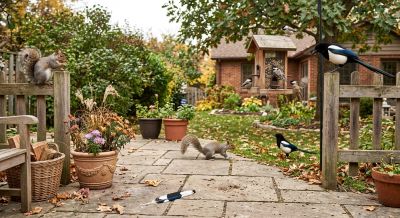
On the morning of my fiftieth birthday, a magpie feather lay on the patio like a small, iridescent threshold. I have found northern flicker feathers before — their warm orange and brown, their grounded energy — but never a magpie feather. Magpies do not leave gifts lightly. They leave markers. They leave symbols. They leave messages.
Magpie feathers carry intelligence, duality, magic, and threshold energy. They belong to birds who move between worlds, who understand the edges of things, who appear when something is shifting beneath the surface. The blue shimmer in the feather felt like a doorway — a sign that the day would not be ordinary, that the land had chosen to mark this milestone with intention.
There is something unmistakable about finding a feather on your birthday, especially one from a bird known for its awareness and cunning. It felt like recognition. It felt like acknowledgment. It felt like the land saying: You have crossed into a new decade. You are stepping into a threshold. You are seen.
The feather was not decoration. It was declaration.
Squirrels, Chickadees, and Magpies — The Lesson of Companionship
The morning unfolded with an unusual abundance of visitors — squirrels approaching with confidence, chickadees flitting through the branches with their bright, curious energy, magpies moving through their molting with a kind of ragged beauty that only birds in transition can carry. It felt like community gathering, like a small assembly of creatures who had decided to accompany me into the day.
Squirrels symbolize familiarity, grounding, territory, and return. They are the creatures who show up when you are known, when you are part of the landscape, when your presence has become woven into the rhythm of a place. Chickadees symbolize joy, curiosity, presence, and small but meaningful blessings — the kind that arrive quietly but leave warmth behind. Magpies symbolize intelligence, magic, recognition, and the crossing of thresholds.
Together, they formed a chorus — a gathering of creatures who seemed to know it was my birthday, who seemed to recognize the milestone, who seemed to accompany me into fifty with a kind of gentle, unspoken ceremony. Their presence felt intentional, as if the land had sent them to stand witness to the day.
It felt like being seen. It felt like being accompanied. It felt like being welcomed into fifty by the wild itself.
The Fledgling Eagle — The Lesson of Lineage Rising
Later, I visited two of my meaningful nests — places where lineage lives, where instinct rises, where the wild reveals itself through flight and presence. These nests have held so many moments for me: the first flights of juveniles, the steady presence of adults, the quiet lessons of territory and sovereignty. They are places where the wild speaks clearly.
At one of them, the fledgling eagle called to me.
His voice carried across the air — sharp, insistent, unmistakable. He perched in the tree, preening, watching, vocalizing with the same raw sound juveniles make when they are learning their place in the world. It was the sound of effort, the sound of becoming, the sound of instinct rising into identity.
A red‑tail was nearby, as if the two species were sharing the same air, the same moment, the same message. The fledgling eagle’s call felt like recognition — not of me as a human, but of me as someone standing at the edge of a new decade, someone stepping into a new phase, someone whose own lineage was rising.
Eagles symbolize sovereignty, identity, rising, clarity, and the next level. A fledgling eagle calling on my fiftieth birthday was not subtle. It was direct. It was the wild saying: You are entering your next decade. Your lineage is rising. Your voice is rising. Your sovereignty is rising.
It was the second altar of the day — a moment of pure, unmistakable symbolism.
The Grace of Turning Fifty and Cleansing by Flash Flood
The Flash Flood — The Lesson of Baptism and Rebirth
Celebration — The Lesson of Allowing Joy
I decided to celebrate — to splurge, to honor the milestone, to let myself enjoy the day. I had pie. I had food. I ate sugar. I let myself feel the softness of arrival, the sweetness of reaching fifty, the quiet joy of being alive.
There is something important about allowing joy on a threshold day, something grounding about letting yourself feel pleasure without guilt, without hesitation, without the weight of the past pressing in.
It was simple. It was human. It was necessary. But the day was not finished. The land had more to say.
The Delays — The Lesson of Timing
On the drive home, timing shifted.
First delay: ten minutes lost behind a cop on US‑85. Second delay: another ten minutes lost at the light at Potomac.
These delays were not random. They were placement. They were alignment. They were the land adjusting the timeline with a kind of quiet precision that only becomes clear in hindsight. Had either delay not happened, I would have reached home before the storm. I would have missed the flood entirely.
But the land was not letting me miss it.
The delays were the third altar — the altar of timing. They were the subtle hands of the wild rearranging the sequence of the day, ensuring that I would be in the exact place at the exact moment the next lesson arrived.
The Flash Flood — The Lesson of Baptism and Rebirth
When I reached 225 from 70, the sky broke open in a way that felt less like weather and more like declaration. The rain didn’t begin with a drizzle or a warning. It arrived all at once — a sudden, violent curtain of water that erased the horizon and swallowed the road. The wipers thrashed at their highest speed, but they couldn’t carve clarity out of the storm. Visibility collapsed into a blur of gray and motion. The world became water.
There is a moment in every flood where the mind realizes it is no longer dealing with rain — it is dealing with an element that has decided to rise. That moment came quickly. The storm pressed itself against the car with a force that felt intentional, as if the land had chosen this exact hour, this exact stretch of road, this exact milestone day to deliver a lesson I could not avoid.
By the time I reached the intersection, the streets had transformed into lakes — eight separate flooded sections along Jewell, each one deeper, darker, and more impossible than the last. In nine years of living here, I had never seen anything like it. The water rose around the tires, pushing against the car, testing the engine, testing my nerves, testing my willingness to keep moving forward. It was not a storm. It was a threshold.
Flash floods do not symbolize gentle change. They symbolize rupture. They symbolize emotional overwhelm, rebirth, baptism, the washing away of what no longer belongs, the crossing into a new phase that cannot be delayed or negotiated. They are the land’s way of saying: You will not carry the old decade into the new one. You will cross clean.
Twice I wasn’t sure the car would make it. Twice I felt the fear rise in my chest, sharp and electric. Twice I felt the land pressing me into the moment, insisting that I stay present, insisting that I feel every inch of the crossing. The water surged around me, and yet something in me stayed steady — not calm, but steady, the kind of steadiness that comes from instinct rather than thought.
I drove through water that felt too deep, too fast, too dangerous, and yet I kept going. Not recklessly — but with the kind of determination that comes when the land is teaching you something you cannot learn any other way. And when I finally emerged from the last flooded stretch, when the tires found dry pavement again, when the storm loosened its grip just enough to let me breathe, I felt something inside me shift.
The flood was not chaos. It was initiation.
It was the land saying: You are being washed clean. You are crossing into your next decade. You are being reborn. You are being initiated. It was the fourth altar — the altar of baptism, the moment the wild made clear that turning fifty was not a number. It was a crossing.
The Car Symbolism — The Lesson of Elevation
Ironically, earlier in the day, I had been researching the Crosstrek — a higher vehicle, a car built for elevation, for snow, for water, for protection. I had been thinking about rising, about safety, about readiness, about foundation, about the next decade.
And then the flood happened. The symbolism was not subtle.
A higher vehicle represents elevation, protection, readiness, rising into the next phase, choosing a foundation that supports your future. The flood was the land saying: You need elevation. You need protection. You need readiness. You need a foundation that matches your next decade.
The car is not just a purchase. It was a symbol. It was the fifth altar — the altar of rising.
.png/:/rs=w:400,cg:true,m)
Clarity - the Soul Lesson
.png/:/rs=w:400,cg:true,m)
The Lesson of the Final Release
When I got home, I decided to use a little THC a friend had gotten me for my birthday — sugar‑free edibles, not smoking, not habit, just a small ritual at the end of a day already heavy with symbolism.
Years ago, in the Shadowland era of my life, I had used far harsher things, and THC eventually became the gentler bridge — the substance that helped me step out of destruction and into something survivable. For a long time it was medicinal, and at times it drifted into something more than that, but it was still miles away from the chaos I once knew. It softened the edges during the years when I was clean but not yet whole, when I didn’t yet know how to soften them myself.
But a year ago, I let it go completely. I no longer needed its medicine. My nervous system had changed. My soul had changed. I had healed myself enough to stand on my own. The part of me who once reached for THC — the part who survived Shadowland, who used gentleness to replace destruction, who leaned on softness when she didn’t yet know how to stand in her own strength — had already dissolved. I simply hadn’t been given the moment to see how complete that release truly was.
Taking it this time felt different: contained, intentional, a moment of softness rather than a pattern. I took two packets first, letting the edges of the day blur just slightly, letting the storm inside me settle. They were gentle, almost ceremonial. Later, I took two more, and the weight of the flood, the delays, the intensity of turning fifty finally caught up with me. I fell asleep quickly, the kind of sleep that feels like surrender rather than escape.
When I woke up, something was different. I didn’t want more. I didn’t crave it. I didn’t feel the pull. I didn’t feel the old pattern rising. The desire that once would have resurfaced without question simply wasn’t there. It was gone — dissolved, quiet, finished.
THC, in that moment, wasn’t about the substance at all. It was about closure. It was about doing something once and letting it end. It was about recognizing that the bridge I once needed had already served its purpose. It was about choosing clarity over fog, choosing future over repetition, choosing the next decade over the last one. It was the moment I understood that even the gentlest coping mechanism had become unnecessary — that I had crossed fully into Godland without noticing the exact step when it happened.
The fact that I didn’t want more was the lesson. It was rebirth. It was release. It was the end of an old cycle — the last soft thread of Shadowland falling away.
It was the sixth altar — the altar of letting go.
Clarity — The Lesson of Arrival
By the end of the day, the pattern was unmistakable.
A magpie feather. A chorus of squirrels, chickadees, and magpies. A fledgling eagle calling. A red‑tail nearby. Pie and celebration. Delays that forced me into the flood. A baptism through water. A car symbol rising. A ritual of release. A clarity afterward.
This was not a birthday. This was arrival.
This was not chaos. This was choreography.
This was not misfortune. This was initiation.
The land had marked my milestone. The animals had accompanied me. The flood had baptized me. The car had symbolized my next foundation. The THC had closed an old chapter. The clarity had opened a new one.
This was the day I turned fifty. This was the day I crossed a threshold. This was the day I arrived.
The Soul Lesson — The Grace of Turning Fifty
Looking back, the thread is clear.
Every messenger carried a different facet of the same truth — a truth I would not have recognized without the land speaking through so many bodies, so many symbols, so many perfectly timed encounters.
The magpie feather marked the threshold. The squirrels and chickadees marked companionship. The fledgling eagle marked lineage rising. The red‑tail marked presence. The flood marked baptism. The car marked elevation. The THC marked release. The clarity marked arrival.
This was not collapse. It was continuation. It was not fear. It was rebirth. It was not chaos. It was initiation.
The land was saying: You made it to fifty. You survived. You crossed. You arrived. You are ready for your next decade.
This is Life Lessons from Nature — not gentle, but true.
This is the day the land marked my milestone.
This is the day the flood washed the old decade away.
This is the day the feather opened the threshold.
This is the day the eagle called me forward.
This is the day I arrived.
Learn More About Soul Life Lessons

Soul Life Lessons Blog
Spirit Animal Symbolism
Soul Life Lessons Blog
Written Series
Spirit Animal Symbolism
Soul Life Lessons Blog
Spirit Animal Symbolism
Spirit Animal Symbolism
Spirit Animal Symbolism